Buying an engagement ring is one of the biggest jewellery purchases many people will ever make. It can also be one of the most confusing. Between outdated "rules", endless opinions online, and a huge range of prices, it's easy to wonder whether you're spending too much, or not enough.
The truth is, there isn't a right amount to spend. The best engagement ring isn't determined by its price tag; it's the one that suits your partner, your budget, and what matters most to the two of you.
So, what should you actually consider?
Ignore the "Three Months' Salary" Rule
Probably, at some point in your life, you will have heard of ‘the rule’ that you should spend three months' salary on an engagement ring.
Despite how widely accepted this idea has become, it isn't an age-old tradition. It actually originated from a series of advertising campaigns by De Beers during the mid-20th century. At the time, diamond engagement rings weren't nearly as common as they are today, and the campaigns were designed to encourage people to view diamonds as the ultimate symbol of love and commitment. The famous slogan, "A Diamond is Forever", was introduced in 1947, while the idea of spending one month's salary on a ring gradually evolved into two months, and then eventually three.
While those campaigns undoubtedly shaped the engagement ring tradition we know today, we don't think there's a one-size-fits-all formula for deciding what to spend.
Every couple's circumstances are different. For some people, an engagement ring is their biggest financial priority. For others, they'd rather put more towards a house deposit, the wedding, or travel.
Set a Price Range That Feels Comfortable
Once you've put the old "salary rule" aside, the next step is deciding on a price range that feels right for you. There isn't a magic number, and no two couples have the same priorities.
Knowing this information simply helps us guide you towards the options that will give you the best result within that price range.
When we design an engagement ring, there are generally two ways we approach the process. Some clients come to us with a very specific vision; a certain diamond size, a particular setting, or a design they've fallen in love with. In those cases, we'll source the materials and provide a quote based on those exact specifications.
More commonly, however, our clients have an idea of the style they're looking for and a budget they'd like to stay within. This gives us the flexibility to suggest design options to achieve that look while making the most of the available budget.
One of the biggest advantages of bespoke jewellery is that the budget can be allocated where it matters most. Some people would rather invest in a larger diamond, while others prefer a smaller diamond with an exceptional cut. Others choose to prioritise a more intricate handmade setting or a rare coloured gemstone.
An engagement ring is a significant purchase, but it should also be an enjoyable one. Our role isn't to encourage you to spend more than you're comfortable with; it's to help you create the best possible ring within your price range.
So, What Actually Determines the Price of an Engagement Ring?
The final cost of an engagement ring comes down to three main factors: the gemstone, the metal, and the craftsmanship involved in creating the design.
The Gemstone
For natural diamonds, price is influenced by the 4Cs: cut, colour, clarity and carat weight. Generally, increasing any of these factors will increase the price, but the most important thing is understanding where your budget creates the biggest visual difference.
For lab-grown diamonds, the pricing structure is different. Because they are generally more affordable than natural diamonds, many people choose to prioritise higher colour and clarity grades while still focusing on excellent cut quality.
For coloured gemstones such as sapphires, value is influenced by factors including size, colour, origin and treatment. While certain colours command higher prices, one of the wonderful things about sapphires is that the colour you personally love is not always the most expensive.
The Ring Design
The design of the ring itself also contributes to the final price. The choice of metal, the amount of material used, and the complexity of the design all play a role.
For example, 18ct gold contains twice as much pure gold as 9ct gold, meaning it generally carries a higher material value. A heavier ring will also require more gold or platinum than a delicate design.
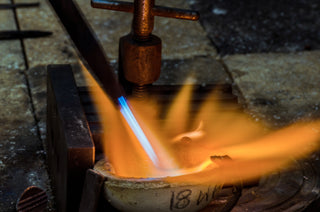
The craftsmanship involved also matters. Bespoke jewellery can be created using a combination of traditional hand fabrication, CAD design, lost-wax casting and hand setting, depending on the design. While the techniques may vary, each piece is individually designed, assembled and finished by skilled jewellers, with care taken throughout the process to ensure the quality of the finished ring. This is quite different from mass-produced jewellery, where the same design may be manufactured in large quantities with much less opportunity for individual adjustment or hands-on quality control.
Spend Where It Makes the Biggest Difference
When it comes to engagement rings, our answer is simple: prioritise what creates beauty.
Typically, the largest part of an engagement ring's cost will be the diamond or coloured gemstone. It can be tempting to focus on the things that are easiest to measure; carat weight, colour, clarity or the size of the stone. However, not all of these factors have the same impact on how a gemstone looks when it is worn.
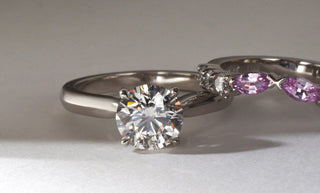
For both diamonds and coloured gemstones, the quality of the cut plays one of the biggest roles in determining the overall appearance of the stone. Cut refers to how the stone has been shaped and faceted, including the symmetry, proportions and angles of each facet. A well-cut stone will interact beautifully with light, creating sparkle, brilliance, depth and visual interest.

Prioritising Cut Quality in Diamonds
When it comes to diamonds, we believe cut is the most important of the 4Cs when it comes to beauty. This is why we only choose diamonds with an Excellent cut grade. A well-cut diamond will be bright, sparkly, well-proportioned and appear the right size for its carat weight.
This is also why, for round diamonds, we place such a strong emphasis on Hearts and Arrows diamonds. These diamonds are cut with an exceptional level of precision, creating a pattern of symmetrical arrows when viewed from the top and hearts when viewed from the bottom. This pattern is only possible when the facets are aligned with an extremely high level of accuracy, maximising the diamond's light performance and sparkle.
If I were choosing between a D colour, flawless diamond with a low-quality cut and an H colour, SI1 clarity diamond with an exceptional cut, I would personally choose the H colour diamond. While the D colour diamond has the highest possible colour and clarity grades, the H colour diamond is likely to be the more beautiful stone because the superior cut will create more sparkle and life.
Colour and clarity are still important considerations, but they are not always the features that make the biggest visual difference.
Bigger Isn't Always Better
Carat weight is one of the easiest things to compare when looking at diamonds, but it does not tell the whole story. Carat is a measurement of weight, not size, and two diamonds with the same carat weight can look noticeably different when viewed from above.
A well-cut 1ct round diamond will typically measure around 6.4–6.5mm in diameter. However, a diamond that has been cut with more weight hidden in its depth may still technically weigh 1ct while measuring closer to 6.2mm across. Although both diamonds have the same carat weight, one may appear smaller and less impressive once set into a ring. In some cases, a beautifully cut 0.8ct diamond may appear larger and more brilliant than a poorly proportioned 1ct diamond, while also offering better value.
Shapes such as ovals and pears tend to have a larger face-up area for their carat weight, so they can appear larger than some other shapes of the same weight. This is another reason why looking at the diamond's actual measurements, rather than carat weight alone, can be helpful when comparing stones.
Choosing Coloured Gemstones
With coloured gemstones, the conversation is slightly different. While cut remains very important, colour becomes the defining feature.
Sapphires and rubies are two of our favourite choices for engagement rings and everyday jewellery because of their durability, making them well suited to pieces that are worn regularly. However, unlike diamonds, where we often look for maximum brightness and brilliance, coloured gemstones are valued heavily for their unique colour and character.
A sapphire with a beautiful, vivid colour may be the perfect choice even if it does not have the same type of sparkle as a diamond. While certain colours may be more valuable from a gemmological perspective, the shade that catches your eye may be quite different.
That said, cut still plays an important role. A gemstone with exceptional colour but poor proportions may appear dull or lifeless, whereas a well-cut stone will enhance its colour, depth and brightness.
Ultimately, choosing a gemstone involves balancing quality, beauty and personal preference. Understanding how these factors affect the appearance and value of a stone can make the decision much easier.

What Else Should You Consider?
Once you understand what affects the price of an engagement ring, there are a few other factors worth considering when deciding which diamond, gemstone and setting are right for you.
Consider what you would most like to prioritise: size, colour or clarity.
With diamonds, there is often a balance to be found between these three factors. Some people would rather maximise the size of their diamond, while others place more importance on a higher colour or clarity grade.
This is one reason we like to show people a range of diamonds in person. The differences between colour grades are measurable, but can be quite subtle to the naked eye. Some people are perfectly happy with the appearance of a G–I colour diamond, while others prefer the whiter appearance of a higher colour grade. Similarly, while a VVS diamond is exceptionally clean, many people will not see a difference between higher clarity grades without magnification. For others, knowing they have chosen a particularly high clarity diamond is part of what makes the stone special.
Consider a lab-grown diamond.
If having a larger or higher-specification diamond is a priority, a lab-grown diamond is another option worth considering. Lab-grown diamonds have the same chemical and physical properties as natural diamonds, but are generally available at a significantly lower price. This can allow you to put more of your budget towards size, colour or clarity while still choosing an exceptionally well-cut diamond.
Consider a sapphire.
Sapphires offer a beautiful and durable alternative to diamonds, with a huge range of colours available. Because coloured gemstones are valued differently to diamonds, you may be able to choose a larger or more distinctive stone while staying within your budget.
Consider the durability of your chosen gemstone.
Diamonds, sapphires and rubies are popular choices for engagement rings because of their durability, however, there are many other beautiful coloured gemstones to choose from. If you are considering a softer gemstone, it is worth thinking about how and when the ring will be worn.
A less durable stone may require more care over time and, in some cases, may need repairs or replacement if it becomes damaged. While choosing a softer gemstone can reduce the initial cost, ongoing maintenance can sometimes make it a false economy in the long term. This does not mean softer gemstones cannot make beautiful jewellery; they can be wonderful choices when chosen with the right expectations.
Consider the long-term maintenance of your chosen metal.
When choosing between white gold and platinum, it is worth considering not only the initial cost but also the ongoing care. While 9ct and 14ct white gold can often be more affordable than platinum, they usually require periodic rhodium plating to maintain their bright white appearance. Platinum does not require this additional maintenance, so the long-term cost and convenience may be worth considering when making your decision.
The Most Important Question
Instead of asking “How much should I spend?”, perhaps the more useful question is “What will my partner love wearing every day for the next fifty years?”
For some people, that might mean choosing a smaller but exceptional diamond. For others, it might mean a sapphire, a beautifully made setting, or personalising the little details that make the ring feel like it was made especially for them.